In the remote mountainous belt of Uttarakhand’s Pithoragarh district, two Raji villages – Kimkhola and Bhaktirwa – have demonstrated how collective action and determined leadership can turn promises into reality. For years, the marginalised Raji community, particularly its women, have been quietly transforming their own narrative, moving from silence to assertion, from isolation to organisation.
The recent success of securing a multipurpose building within Kimkhola village, after resisting its relocation 2-3 km away, marks a powerful milestone in this journey.
District-Level Advocacy as a Turning Point
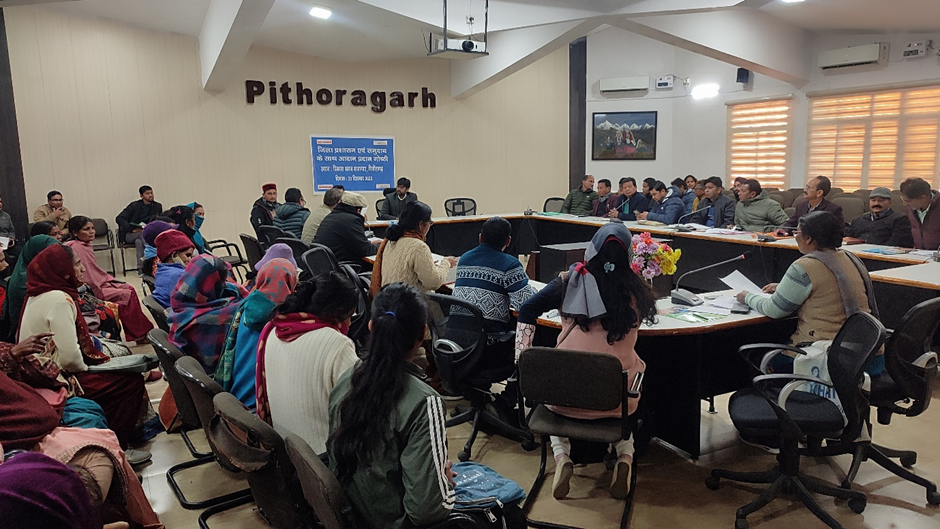
In 2023, the Raji Mahila Sangathan, representing nine villages, raised long-standing issues around basic entitlements and development access in a district-level meeting in Pithoragarh, which was facilitated by ARPAN. Encouragingly, the Chief Development Officer, along with representatives from many other government departments, responded with a major announcement: multipurpose buildings would be constructed in all nine villages to serve as integrated spaces for village-level resolution of issues, Anganwadi services, and health sub-centres.
This wasn’t just a policy decision – it was a door opening.
Contesting Displacement through Unity
When tenders were floated in April 2024 under the Dharchula Block for the construction of these multipurpose buildings in Kimkhola, Bhaktirwa, Gangaon, and Chifaltara, three villages smoothly aligned with the plan. But in Kimkhola, the land being identified for construction lay far from the main village, an unacceptable proposition for the Raji families.
Instead of passive acceptance, the community organised.
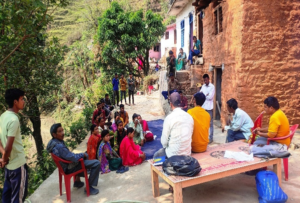
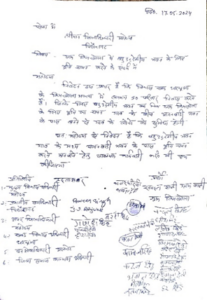
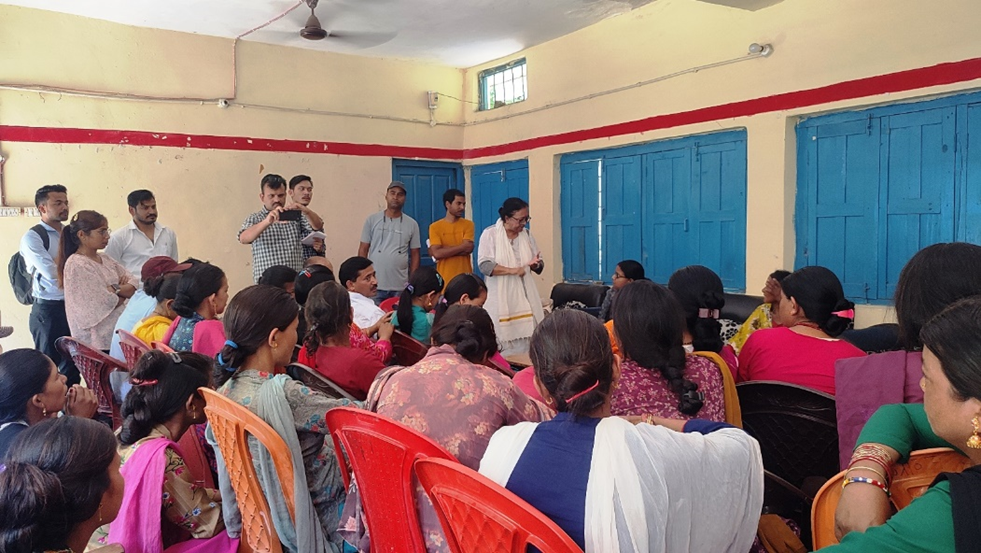
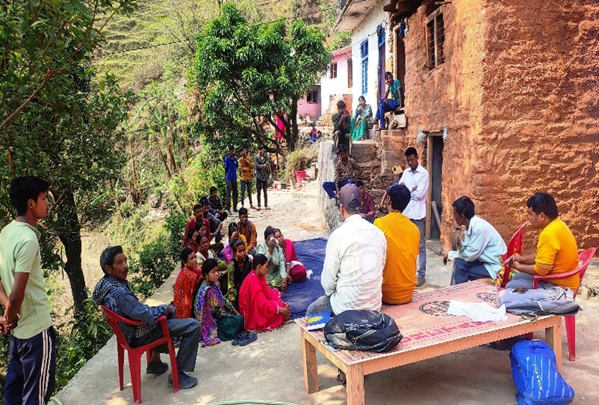
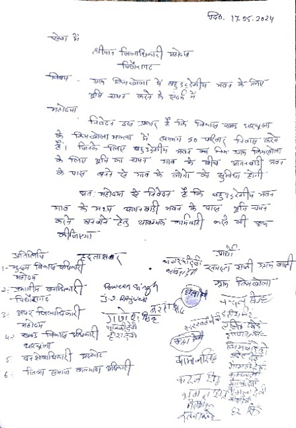
Through a village-level meeting in May, all Raji families collectively resolved that the building must be constructed within the village itself. Harish Singh Rajwar and Kavita Rajwar, respected residents of Kimkhola, offered a portion of their titled land for this public purpose. A formal proposal, supported with community signatures, was submitted to the District Magistrate.
Legal Awareness and Strategic Engagement
Recognising the importance of institutional dialogue, members of the Raji community engaged with the Secretary of the District Legal Services Authority, Ms. Manju Devi, who visited the village and assured further discussion with district authorities. Energised by this interaction, the collective convened again, this time including Bhaktirwa, and resolved to pool funds to send a small delegation to meet senior officers in Pithoragarh.
On June 6, a determined group comprising three Raji women and one man met the District Magistrate, Chief Development Officer, and other key officials. They presented a range of demands, from ensuring the multipurpose building remains within the village, to land entitlements, school admissions, and social welfare schemes.
This was not just a meeting – it was a declaration of agency.
Ground-Level Initiative and Institutional Response
Their efforts bore fruit. The District Magistrate directed the Social Welfare Department to select village land for the construction, and the Block Development Officer was instructed to hold an open meeting in Kimkhola. This meeting, held on July 3, was attended by over 40 officials and villagers. Crucially, Harish Singh’s and Kavita’s land offer was formalised through a No Objection Certificate, verified and geo-tagged by the Forest Department and the Panchayat.
Today, the multipurpose building is finally set to rise within Kimkhola, on community-donated land, sanctioned by the administration, and driven by collective resolve.
Model of Participatory Development
For over two decades, ARPAN has been working closely with the Raji community – nurturing leadership among women, facilitating collective processes, and building a culture of rights awareness and participatory governance. While ensuring that the community remains at the forefront, ARPAN continues to support the process by drafting letters, facilitating meetings, navigating departments, and providing strategic direction. This approach is helping shift the locus of power from the NGO to the people and reflects what a people-led model of empowerment should look like.